
As battery chemistries evolve and volumes increase, thermal risk will continue to grow unless controls evolve alongside them. Facilities that invest now in layered detection, response, and documentation systems are positioning themselves not only to reduce fires, but to also meet the next generation of regulatory and insurance expectations.
By Brandon Black
In the waste and recycling industry, there is a phrase that operators increasingly use for loads that make everyone uneasy: the “spicy load.” More often than not, it signals the presence of lithium-ion batteries.
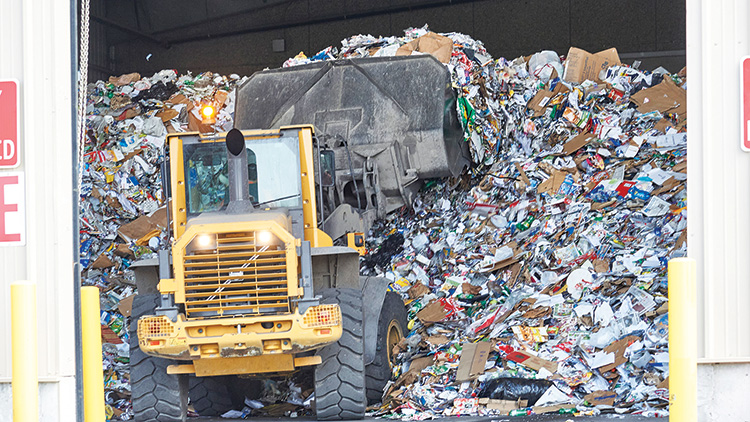
As of 2026, lithium-ion batteries have shifted from an emerging concern to one of the primary drivers of fires at transfer stations, material recovery facilities (MRFs), and landfills. Publicly reported fire incidents reached at least 448 across U.S. and Canadian waste and recycling facilities in 2025, according to industry fire tracking data, making it the worst year on record and nearly 25 percent above historical averages. Industry fire consultants now identify lithiumion batteries as the leading ignition source behind these incidents. Whether hidden in household waste, embedded in power tools, or arriving in damaged e-bike batteries, they are showing up everywhere. And unlike traditional combustibles, these fires behave differently, spread faster, and carry growing compliance implications.
For years, facilities largely relied on reactive fire-watch practices, only responding once smoke appeared, but that mindset is changing. The conversation is moving toward what many are calling Thermal Defense, which is a proactive strategy that combines hazard recognition, fire prevention, technology, and documentation to stop a thermal event before it becomes a regulatory event. In this context, Thermal Defense refers to a layered risk management framework designed to identify, isolate, and neutralize abnormal heat events before ignition or regulatory impact occurs.
Why Lithium-Ion Batteries Are Different
The problem is not simply that batteries burn. It is that they can undergo thermal runaway, a self-sustaining chemical reaction that can generate extreme heat, release flammable gases, and re-ignite even after suppression. In real-world waste operations, this behavior translates into severe operational risk, with battery-related fires now driving an estimated $2.5 billion in annual fire damage across U.S. and Canadian facilities.
At a transfer station, compaction or loader activity can puncture a battery and trigger ignition in seconds. Even fully discharged or “dead”, lithium-ion batteries can still undergo thermal runaway when crushed or damaged. Then, once buried in the landfill, waste can reach internal temperatures that can exceed 200°F to 250°F in localized zones, allowing damaged batteries to ignite long after disposal, often resulting in smoldering subsurface fires that persist for weeks or months.
Although federal regulations under the Resource Conservation and Recovery Act (RCRA) do not fully cover lithium-ion batteries in municipal waste, regulators, insurers, and industry groups such as the Solid Waste Association of North America (SWANA) and the National Waste and Recycling Association (NWRA) are pushing greater attention toward recognized safety controls. The distinction matters, because OSHA’s General Duty Clause allows known hazards without reasonable mitigation to become the basis for enforcement.
Best Practice: A Three-Tiered Thermal Defense Strategy
Leading facilities are moving beyond generic fire prevention plans and adopting layered controls that blend human awareness with automated systems.
Tier 1: Source Control Starts at the Gate
The best fire to fight is the one that never reaches the tipping floor. Efforts often start at the gate, with enhanced load screening. Scale house staff and spotters are being trained to flag high-risk loads, particularly those containing electronics, e-scrap, large battery packs, or micromobility debris. Many have also implemented visual verification checklists and protocols that divert questionable loads to battery staging or isolation areas before they reach active operations.
Education beyond the facility gate is also critical. Public signage, generator outreach, and coordinated battery take-back programs with municipalities or retailers can help keep lithium-ion batteries out of the waste stream altogether.
Some facilities are also strengthening generator accountability by documenting rejected loads, issuing formal notices, or requiring certification that battery-containing materials have been removed. Over time, these measures help shift risk upstream and reinforce shared responsibility for battery management.
Tier 2: Strengthen Floor-Level Controls
Much of the threat management shifts to the tipping floor. Facilities are designating battery quarantine zones to isolate suspect materials from active operations and are reinforcing employee training to identify early indicators such as popping noises, smoke, abnormal heat, or the characteristic chemical odor of battery venting.
Housekeeping practices further support these measures. By limiting pile size, reducing dwell time, and moving material regularly, facilities can decrease fuel loads and reduce the likelihood that an ignition spreads. Fire suppression strategies are under similar review. While water continues to be a key cooling tool, some operators are testing specialized suppression agents or enhanced foam systems better suited to battery-related fires.
Tier 3: Use Technology to Detect Heat Before Flames
To overcome the limits of visual inspection, many facilities are turning to thermal imaging technology. Fixed cameras installed on tipping floors and transfer stations provide continuous monitoring and can distinguish between routine heat sources, such as operating equipment, and unusual static heat signatures forming within waste piles.
When integrated with alarms or automated suppression systems, thermal imaging can deliver early alerts that allow crews to intervene before conditions worsen. Beyond real-time response, some operators are using thermal data to support predictive maintenance and track incident trends, treating the technology as a long-term safety and compliance asset.
Documentation Is Part of Fire Prevention
In the aftermath of a fire, investigators typically ask two questions: what happened, and what safeguards were in place beforehand? As a result, documentation has become an essential part of risk management.
An increasing number of facilities are formalizing their recordkeeping through what some describe as a thermal incident ledger. These logs capture how a hot spot or fire was detected, whether batteries were involved, how suppression was managed, response timelines, and any corrective actions that were taken. Training documentation, inspection logs, and recorded response drills also play a critical role, often carrying compliance weight comparable to physical fire protection systems.
From Reactive to Proactive
Treating lithium-ion battery fires as an unavoidable part of operations is becoming increasingly difficult to justify. The hazard is now common enough, and well enough understood, that expectations around prevention and control have shifted.
Facilities are responding by building layered defense programs rather than relying on a single fix. These approaches integrate proactive screening, employee awareness, isolation areas, updated suppression capabilities, thermal detection technologies, and consistent documentation practices, which many now describe as Thermal Defense.
In practice, managing lithium-ion battery risk is not only about fire suppression, it is also about safeguarding personnel, meeting regulatory expectations, limiting operational disruption, and preventing a single problematic load from driving a larger incident.
As battery chemistries evolve and volumes increase, thermal risk will continue to grow unless controls evolve alongside them. Facilities that invest now in layered detection, response, and documentation systems are positioning themselves not only to reduce fires, but also to meet the next generation of regulatory and insurance expectations. | WA
Brandon Black is a Compliance Expert at J. J. Keller & Associates, Inc. Brandon became a member of the team in 2025, his commitment to safety and compliance making him an asset for customers and clients. Before joining J.J. Keller, Brandon spent more than 10 years in EHS roles in the manufacturing, warehousing, and consulting. His interests include hazardous waste, fall protection, and hazard communication. His professional certifications include Occupational Hygiene and Safety Technician (OHST), Environmental Specialist (ENS), Hazwoper 40, PIV Train-the-Trainer, First-aid/CPR, and OSHA 511 General Industry. Brandon can be reached at [email protected].